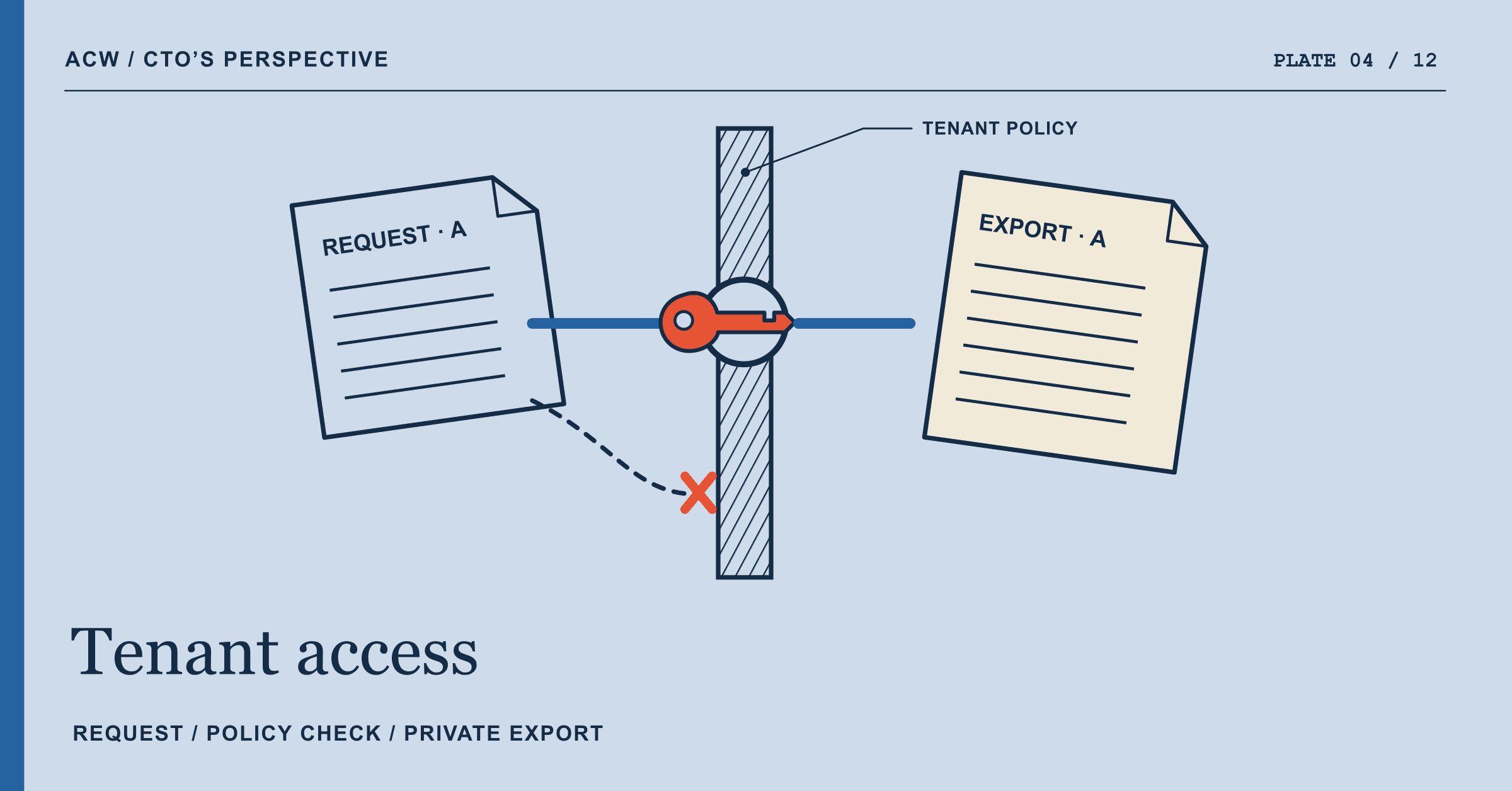
The week in brief
- Audit consumers face a change in enterprise identity. An incident dashboard can keep receiving events while a name-based filter quietly drops the records that should page an operator.
- GitHub CLI offers expiring OAuth credentials in preview. A workstation workflow that copied a token once and expected it to last indefinitely may behave differently after opt-in.
- Public monitoring reaches data-residency tenants in preview. The quality of the domain inventory becomes part of the monitoring design.
Act now, Evaluate and Watch are ACW’s editorial assessment, not a rating by an independent agency.
Audit consumers face a change in enterprise identity
ACW assessment: Act now. A component, access, cost or migration deadline you rely on is affected.
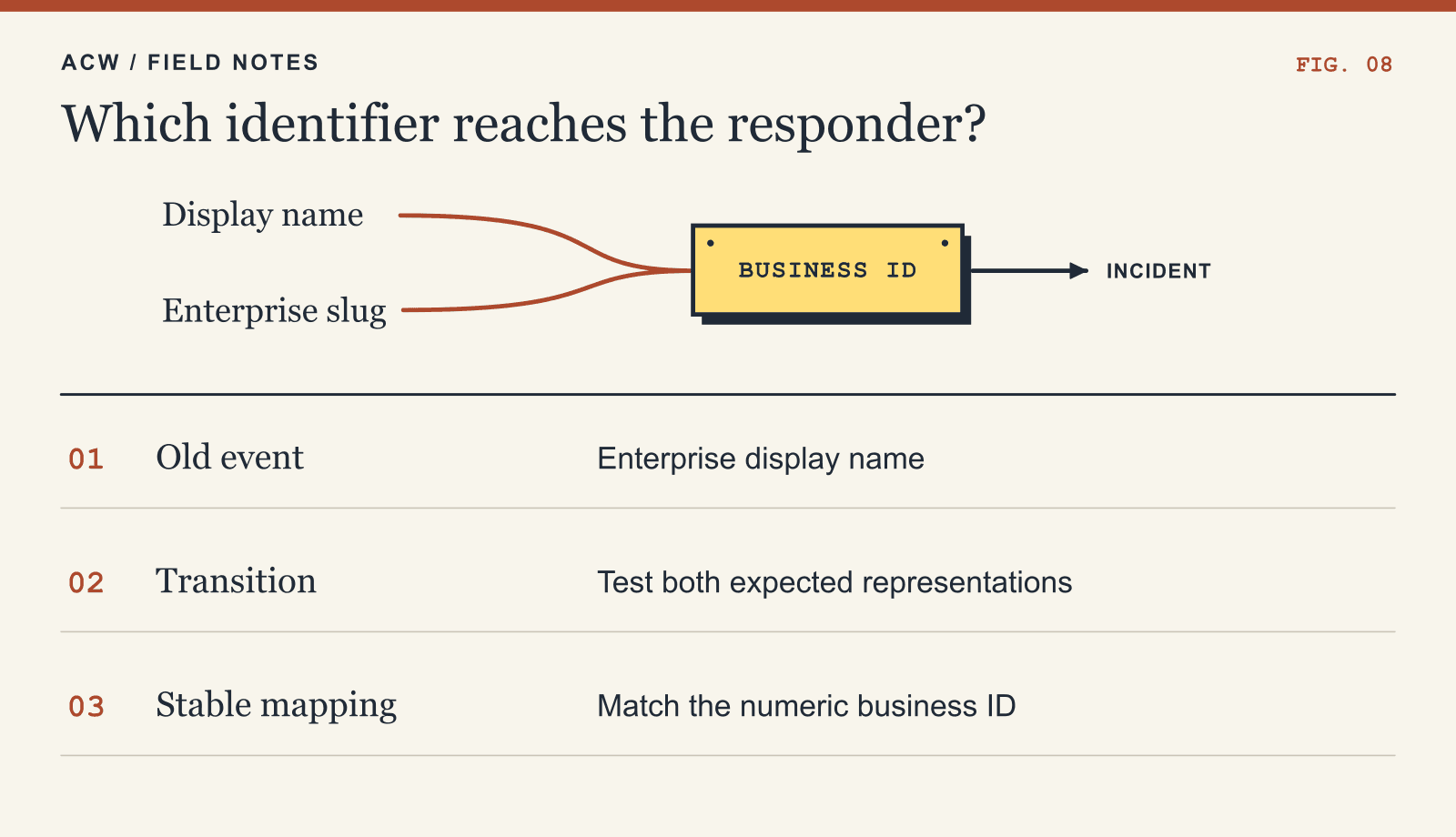
What happened. GitHub announced on October 20 that the business field in affected secret-scanning audit events would switch from enterprise display name to slug on November 12. The numeric business identifier and event names were scheduled to stay the same. [1]
Why it matters (ACW analysis). An incident dashboard can keep receiving events while a name-based filter quietly drops the records that should page an operator. This is a routing problem as much as a parsing change. A team that checks only whether its webhook endpoint returns success could miss the effect on the person expected to respond. The announcement date belongs to this issue. The planned field change falls outside its coverage window.
Who is affected: Enterprise security operations and owners of audit integrations.
What to do next. Find consumers that select events by display name. Replay one synthetic event with the current value and one with the announced replacement. Follow both through the actual routing rules to the same destination. Where a stable identifier fits the integration, test that mapping and verify what happens to an unknown enterprise. Retain a count of unmatched events during the transition and give the operator a way to inspect an unmatched record without exposing a token. Review the change again against GitHub's notice before the effective date.
Source: Updates to GitHub secret scanning (opens in a new tab)Event date: · Verified:
GitHub CLI offers expiring OAuth credentials in preview
ACW assessment: Evaluate. A relevant new option has appeared and is worth checking.
What happened. GitHub opened a public preview of expiring, automatically refreshed OAuth credentials for its CLI. Users can opt in at login starting with version 2.103.0. [2]
Why it matters (ACW analysis). A workstation workflow that copied a token once and expected it to last indefinitely may behave differently after opt-in. A pilot should exercise the tools that use the credential outside the initial login.
Who is affected: Developer experience leads and workstation administrators.
What to do next. Choose one managed workstation. Verify interactive CLI access and the normal Git-over-HTTPS operation before and after credential renewal. Inspect failures in the approved credential helper before broadening adoption. Keep unattended service identities in a separate review so a workstation decision cannot silently break a build account.
Source: GitHub CLI: Opt in to expiring, auto-refreshing OAuth tokens (opens in a new tab)Event date: · Verified:
Public monitoring reaches data-residency tenants in preview
ACW assessment: Evaluate. A relevant new option has appeared and is worth checking.
What happened. GitHub announced public monitoring in preview for eligible Enterprise Cloud customers with data residency. It uses verified domain matching to attribute public-commit credential exposures in this environment. [3]
Why it matters (ACW analysis). The quality of the domain inventory becomes part of the monitoring design. A division that operates under a different verified identity can have a different coverage boundary than the central security team expects.
Who is affected: Enterprise administrators and incident responders.
What to do next. Inventory the domains the organization expects to cover and compare them with the verified configuration. Confirm eligible licensing and where an alert appears. Document the gaps for contractors and external contributors, then rehearse the approved response using a synthetic incident instead of exposing a live secret.
Source: Public monitoring now available with data residency (opens in a new tab)Event date: · Verified:
Public monitoring adds alert triage and webhooks
ACW assessment: Evaluate. A relevant new option has appeared and is worth checking.
What happened. GitHub added timelines, filtering and dismissal for public-monitoring alerts. Supported secret types can receive validity checks, and alerts can be accessed through REST and webhooks. [4]
Why it matters (ACW analysis). A validity signal can help prioritize a queue. Incident closure also depends on whether an exposed credential was revoked, where it was used and whether replacement credentials reached their intended services.
Who is affected: Security operations and integration engineers.
What to do next. Map one alert into the incident system with a stable external identifier. Replay the notification to check for duplicate cases. Agree which state belongs to the source alert and which belongs to the investigation, so a local ticket closure cannot be mistaken for proof that the credential was rotated.
Source: Public monitoring adds triage, validity, API, and webhooks (opens in a new tab)Event date: · Verified:
Sources and further reading
- Updates to GitHub secret scanning (opens in a new tab). GitHub · 20 Oct 2026 · Accessed 4 Nov 2026
- GitHub CLI: Opt in to expiring, auto-refreshing OAuth tokens (opens in a new tab). GitHub · 21 Oct 2026 · Accessed 4 Nov 2026
- Public monitoring now available with data residency (opens in a new tab). GitHub · 22 Oct 2026 · Accessed 4 Nov 2026
- Public monitoring adds triage, validity, API, and webhooks (opens in a new tab). GitHub · 23 Oct 2026 · Accessed 4 Nov 2026
About the author. Oleksandr Veklych, Co-founder & CTO, ACW Soft Solutions. Oleksandr Veklych is the CTO and co-founder of ACW Soft Solutions, where he leads technical strategy and delivery for custom software: SaaS platforms, marketplaces, internal business systems, mobile apps and AI-based solutions. His focus is turning growing complexity into clear architecture, reliable delivery and scalable technical decisions, so teams can move faster without rebuilding everything. He holds a bachelor’s degree in cybersecurity from Taras Shevchenko National University of Kyiv. View profile