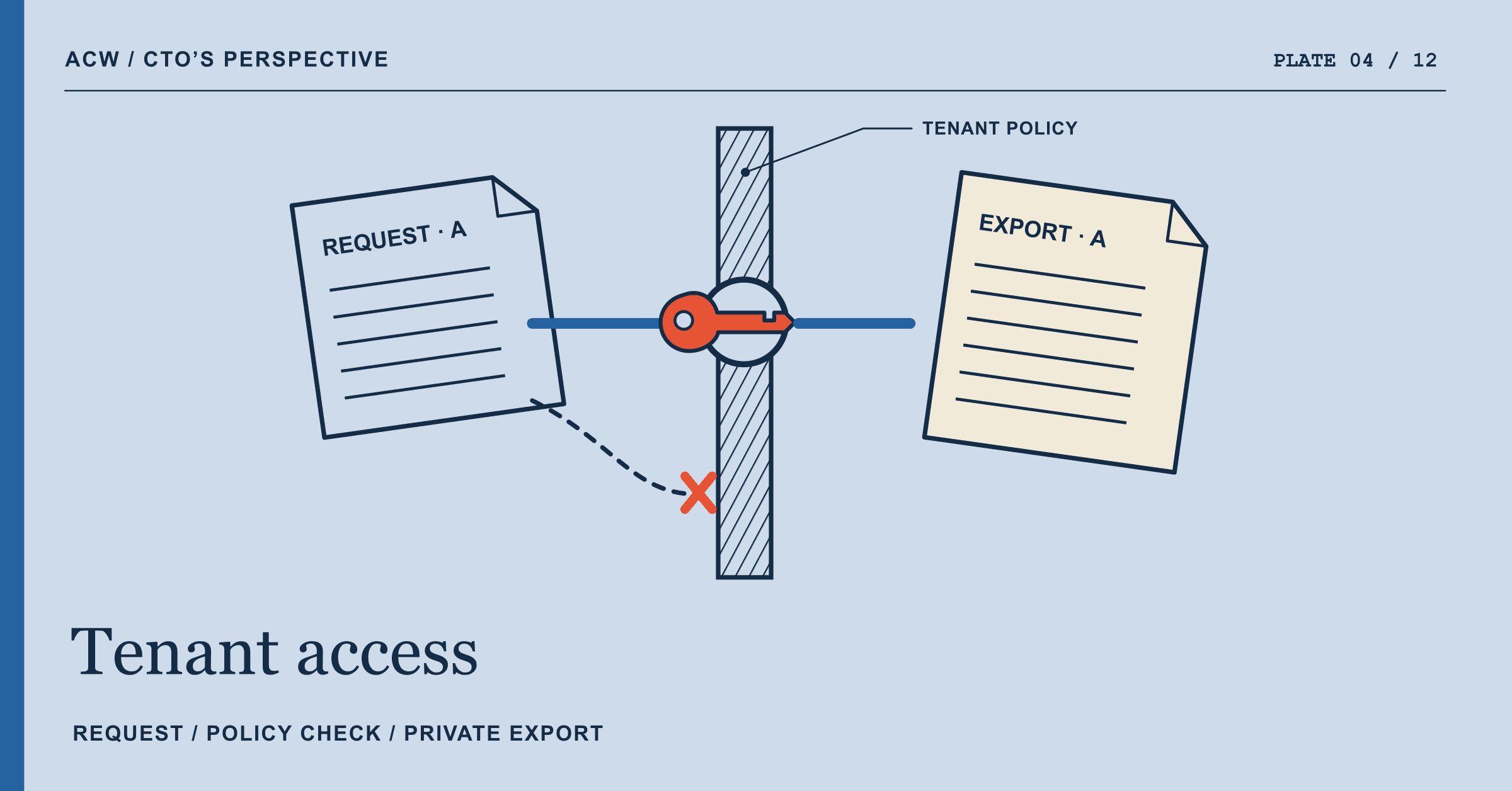
The week in brief
- Reviewers gain AI scanning on pull requests. For a CTO, the useful question is which customer-facing change now receives a check that previously had no owner.
- An assigned alert can become a draft fix. A passing rescan answers a narrower question than a customer acceptance test.
- Dismissed quality findings leave an audit trail. A change in the number of open findings can reflect a new risk decision as well as a repair.
Act now, Evaluate and Watch are ACW’s editorial assessment, not a rating by an independent agency.
Reviewers gain AI scanning on pull requests
ACW assessment: Evaluate. A relevant new option has appeared and is worth checking.
What happened. GitHub announced general availability for AI Scan on pull requests. It extends analysis of proposed changes to languages and configurations beyond existing CodeQL coverage, including PHP, shell scripts and Dockerfiles. [1]
Why it matters (ACW analysis). For a CTO, the useful question is which customer-facing change now receives a check that previously had no owner. Consider a repository where a PHP checkout service and its Dockerfile change together. A reviewer can use an alert to locate a risky edit while still checking how the container runs and which credentials the service receives. The scan examines a change. Operational behavior also depends on the deployment around it.
Who is affected: Platform engineering, security leads and maintainers of mixed-language repositories.
What to do next. Choose a repository where an uncovered language matters to the service. Identify one proposed change the team would expect the scanner to flag and one legitimate change a reviewer should allow. Enable the feature within the applicable account settings, inspect how findings reach the responsible person and agree how that person records a disposition. Before making the check mandatory, measure how many findings the review team can investigate within its normal release window. Keep a human accountable for deciding whether an unresolved finding blocks shipment.
Source: AI Scan for pull requests generally available (opens in a new tab)Event date: · Verified:
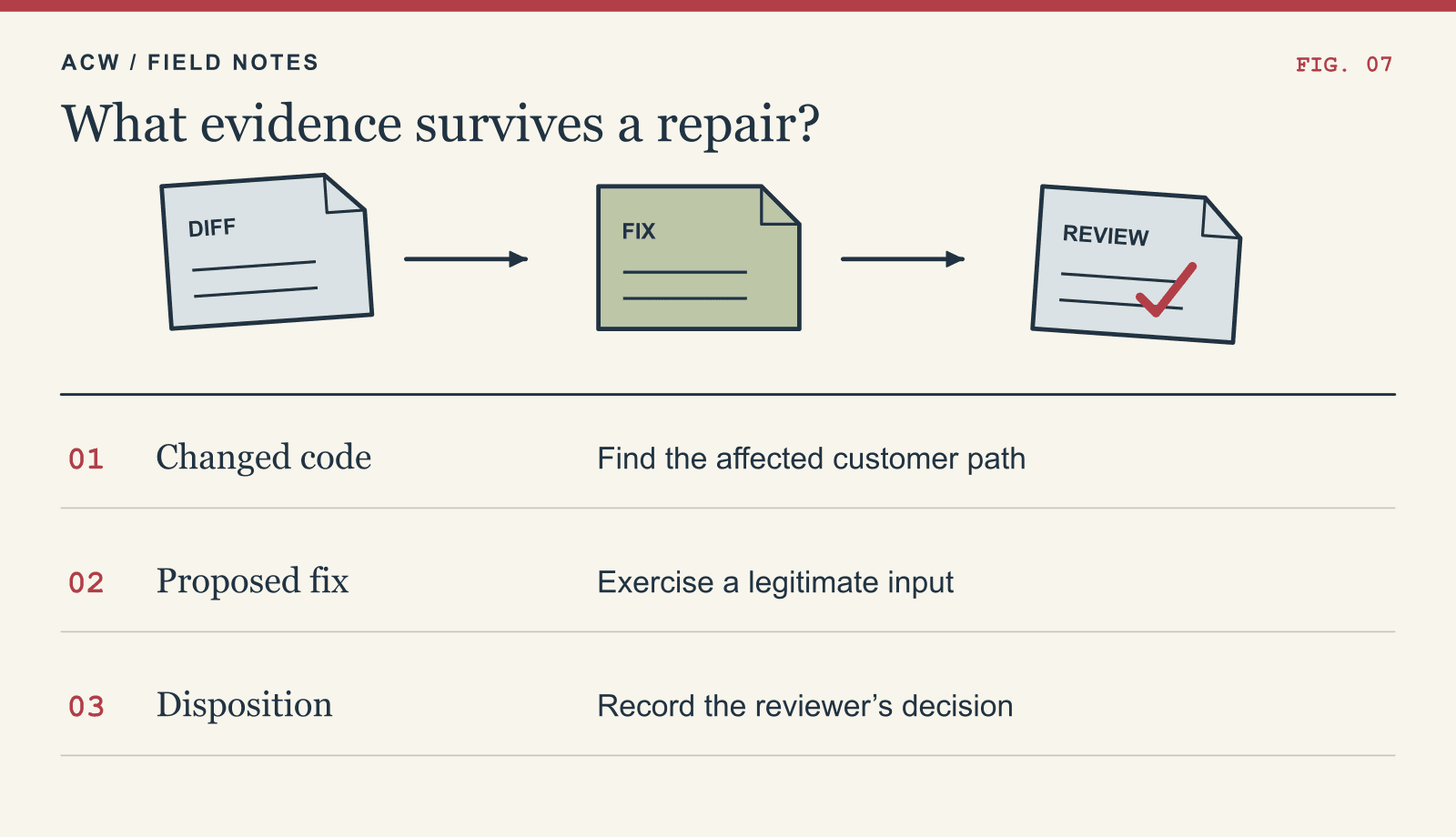
An assigned alert can become a draft fix
ACW assessment: Evaluate. A relevant new option has appeared and is worth checking.
What happened. GitHub made agentic autofix for code scanning alerts generally available. Assigning an eligible alert to Copilot can produce a draft pull request after the agent investigates the repository and reruns CodeQL. [2]
Why it matters (ACW analysis). A passing rescan answers a narrower question than a customer acceptance test. A change that removes unsafe input handling could also reject a legitimate input format used by an integration.
Who is affected: Engineering managers and application maintainers.
What to do next. Start with an alert whose affected route and owner are known. Keep one normal input and one malicious input as separate fixtures. Review what the patch permits and rejects, then verify that the original finding was addressed. Record the reviewer who accepted any change in customer-visible behavior.
Source: Agentic autofix for code scanning alerts general availability (opens in a new tab)Event date: · Verified:
Dismissed quality findings leave an audit trail
ACW assessment: Evaluate. A relevant new option has appeared and is worth checking.
What happened. GitHub added audit events for manual dismissals and reopenings of Code Quality findings. For repositories with the feature enabled, the organization or enterprise audit log can identify the actor and affected findings. [3]
Why it matters (ACW analysis). A change in the number of open findings can reflect a new risk decision as well as a repair. The event gives a reviewer a starting point for reconstructing what happened.
Who is affected: Security leads and engineering operations.
What to do next. Sample one dismissed item and follow it from the audit event to the underlying repository decision. Check whether another reviewer can recover the reason and any expiry condition. Assign an owner to revisit exceptions that remain open after the original reason for dismissal disappears.
Source: Audit GitHub Code Quality finding dismissals and reopenings (opens in a new tab)Event date: · Verified:
Secret scanning adds provider-specific coverage
ACW assessment: Evaluate. A relevant new option has appeared and is worth checking.
What happened. GitHub announced new detections covering credentials from Salesforce, Anthropic and Cloudsmith. The newly covered Anthropic types were added to default push protection. [4]
Why it matters (ACW analysis). A supported pattern can help catch accidental disclosure before a change enters repository history. Teams still need a response for credentials that escaped through another channel or were committed before a detector was enabled.
Who is affected: Repository owners and platform security.
What to do next. Inspect which protected repositories contain integrations with these providers. Give developers an approved way to load test credentials without placing them in source. Use a provider-approved test pattern where available, and verify that a legitimate block routes to someone who can help without asking for the credential itself.
Source: Secret scanning blocks Anthropic keys by default, adds Salesforce (opens in a new tab)Event date: · Verified:
Sources and further reading
- AI Scan for pull requests generally available (opens in a new tab). GitHub · 15 Oct 2026 · Accessed 4 Nov 2026
- Agentic autofix for code scanning alerts general availability (opens in a new tab). GitHub · 15 Oct 2026 · Accessed 4 Nov 2026
- Audit GitHub Code Quality finding dismissals and reopenings (opens in a new tab). GitHub · 13 Oct 2026 · Accessed 4 Nov 2026
- Secret scanning blocks Anthropic keys by default, adds Salesforce (opens in a new tab). GitHub · 13 Oct 2026 · Accessed 4 Nov 2026
About the author. Oleksandr Veklych, Co-founder & CTO, ACW Soft Solutions. Oleksandr Veklych is the CTO and co-founder of ACW Soft Solutions, where he leads technical strategy and delivery for custom software: SaaS platforms, marketplaces, internal business systems, mobile apps and AI-based solutions. His focus is turning growing complexity into clear architecture, reliable delivery and scalable technical decisions, so teams can move faster without rebuilding everything. He holds a bachelor’s degree in cybersecurity from Taras Shevchenko National University of Kyiv. View profile